

iloo.over-blog.com/
14 Février 2021

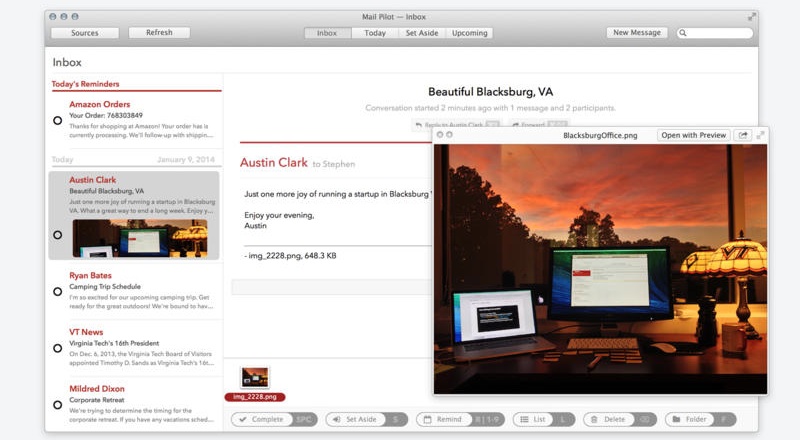
Question: Your Task Is To Develop A Simple Mail Client That Sends Email To Any Recipient. Your Client Will Need To Connect To A Mail Server, Dialogue With The Mail Server Using The SMTP Protocol, And Send An Email Message To The Mail Server. Python Provides A Module, Called Smtplib, Which Has Built In Methods To Send Mail Using SMTP Protocol. HTML Search: To search the HTML version of a User Guide, click the main link to the guide on the GroupWise 8 Documentation Web site, then select the sections of the guide that you want to search in the left pane.All sections of the guide are selected by default. Type the word or phrase to search for, then click Search Checked Items For.Web search technology is used to return pages where the. Mail Pilot simplifies email with a task-oriented approach. From deleting an advertisement to remembering to pay your cell phone bill, all messages are action-based. COMPLETE YOUR MESSAGES.
This Novell GroupWise 8 Client Frequently Asked Questions (FAQ) is intended to help GroupWise client users who have not found the information they need in the GroupWise client online help or User Guides:
We want to hear your comments and suggestions about this manual and the other documentation included with this product. Please use the User Comment feature at the bottom of each page of the online documentation, or go to Novell Documentation Feedback and enter your comments there.
For additional GroupWise documentation, see the following client guides at the Novell GroupWise 8 Documentation Web site:
GroupWise Windows Client User Guide
GroupWise Linux/Mac Client User Guide
GroupWise WebAccess Client User Guide
All three GroupWise clients offer online help.
Windows Client: Click Help > Help Topics and Help > Training and Tutorials.
Mac Client: Click Help > GroupWise Help.
The online help in the clients offers three ways to access the information provided in the help:
Contents: Provides task oriented ('How Do I') access to the help information. This is a great place for beginners to get started.
Index: Provides alphabetical access to common tasks and features. This is a great help when you know what you want to do but you can't figure out how to do it.
Search: Provides a full text search of the help information based on keywords. If the index doesn't have it, the full text search should.
If the online help doesn't help you, proceed to Step 2: Online Training and Tutorials in the GroupWise Windows Client or Step 3: User Guides on the GroupWise Documentation Web Site.
If you are using the GroupWise Windows client, click Help > Training and Tutorials for additional assistance. By default, this option displays the GroupWise 8 End-User Training page provided by BrainStorm, Inc. However, your GroupWise administrator can customize the URL that displays when you click Help > Training and Tutorials. It might be more in-depth training provided by BrainStorm, or it might be customized training provided by your GroupWise administrator. Make sure you are familiar with the contents of the Training and Tutorials feature.
All GroupWise clients have an easy-to-access User Guide posted on the GroupWise 8 Documentation Web site:
Linux Client: Click Help > User Guide.
WebAccess Client: Click Help > Novell GroupWise 8 Documentation Web site > GroupWise WebAccess Client User Guide.
The User Guides are provided in both HTML and PDF format. Both formats are searchable and yield different kinds of search results.
HTML Search: To search the HTML version of a User Guide, click the main link to the guide on the GroupWise 8 Documentation Web site, then select the sections of the guide that you want to search in the left pane. All sections of the guide are selected by default. Type the word or phrase to search for, then click Search Checked Items For. Web search technology is used to return pages where the word or phrase is found in the User Guide, ranked according to the likelihood that the page is what you're looking for.
PDF Search: To search the PDF version of a User Guide, click the PDF link to the guide on the GroupWise 8 Documentation Web site. In the Find field, type the word or phrase to search for, then press Enter to find the first instance. Click Find Forward to continue searching through the document for instances of the word or phrase. This full text search procedure is more thorough than the Web search approach.
HINT:When you are in the HTML version of a User Guide, you can click View PDF at the top of any page to immediately open the PDF version of the User Guide.
If the User Guide doesn't help you, proceed to Step 4: User Comments Link in the User Guides.
If you have searched the online help and the User Guide for the GroupWise client you are using and you still cannot find the information you need, you can submit a user comment about the documentation. Just click Add Comment at the bottom of any page of the HTML version of the documentation.
IMPORTANT:For best results, submit your comment on the page of the User Guide where you tried to find the information.
When you submit a user comment, one of the following things happens:
We know where the answer to your question is in the current documentation. We send a response to you to help you find the information you need.
We know the answer to your question and we discover that it is not in the current documentation. We send a response to you and post the information on the page where you made your comment. The information will be added to the next version of the GroupWise documentation.
We don't know the answer to your question. We find the answer to your question, then proceed as described above.
We technical writers can't help you resolve problems with the GroupWise software. When GroupWise doesn't work for you the way it's supposed to, we refer you to Step 5: GroupWise Support Forum.
The GroupWise Support Forum provides assistance from over 30 volunteer sysops from around the world, not to mention helpful GroupWise users from around the world as well. If the GroupWise client isn't working for you as documented, post your problem on the GroupWise Support Forum for free assistance.
NOTE:External cross-references in the section are found in the GroupWise 8 Windows Client User Guide.
See Assigning a Password to Your Mailbox
.
Contact your organization's GroupWise administrator.
See Understanding the Main GroupWise Window
and Using Panels to Organize Your Home Folder
.
Right-click the Home icon, then click Properties > Display > Customize Panels > Restore Defaults.
Right-click the Week button on the Calendar View bar, then click Properties. Select Week, then click Edit. Select Week instead of Week (Default), then click OK.
See Creating a Vacation Rule or Auto Reply
.
See Adding a Signature or vCard
.
You cannot edit the information in the GroupWise Address Book yourself. You must contact your GroupWise administrator in order to update your personal information.
See Changing Your Display Name
. If the conditions described in this procedure do not apply to your circumstance, you must have your local GroupWise administrator use ConsoleOne to change how your name appears.
The default Home View includes an Unread Items panel, as described in Understanding the Main GroupWise Window
.
If you don't use the Home View, you can create a Find Results folder, as described in Understanding Find Results Folders
. Use an Advanced Find, and set it up so that Item Status does not include Opened (or any other status that you do not want listed in the Find Results folder). You can then look in this folder to see all your unopened items as a group.
See Starting Notify
.
See Setting How to Be Notified for Calendar Alarms
. To change the sound that plays when a new item arrives in your mailbox, see Setting Notification for New Items
.
At present, you can't set alarms on tasks.
For a single message, you could use the Delay Delivery feature to have a message delivered on a specified day at a specified time. SeeDelaying Delivery of an Item
. However, the Delay Delivery feature cannot be used in conjunction with recurring items. If you want to remind others of something every two weeks, for example, you must set up each reminder individually.
See Scheduling Auto-Dates by Formula
if you want to use reminder notes, or see Scheduling an Appointment for Yourself
if you want to use all day events.
See the following sections:
For a Plain Text formatted message, right-click the message, then click View. Click Print (Preview) Options, then select or deselect Print Header as needed.
For an HTML formatted message, the message displays and prints according to your current Internet Explorer browser settings (File > Page Setup > Headers and Footers).
See Identifying Icons Appearing Next to Items
.
See Mailbox/Calendar Access for Proxy Users
.
At present, there is not an easy way to transfer ownership of a shared folder from one user to another. As a workaround, one of the users with whom the folder is shared can create a new folder and move the contents of the shared folder into it, then share that new folder with the other users, thus becoming the owner of the newly shared copy of the original shared folder. The new owner must have full rights to the original shared folder.
Click View > Folder List. If you're in a context where that doesn't work, click Tools > Options > Environment > Appearance > Display Folder List.
Right-click an existing column heading, click More Columns, then select the columns you want to display.
The Accounts menu is availably only if your GroupWise administrator has enabled this feature, as described in Modifying Environment Options
in Client
in the GroupWise 8 Administration Guide. Ask your GroupWise administrator to enable the feature. Your GroupWise administrator might also require you to be in Caching mode in order to add accounts.
No. Not at the present time. However, there are third-party applications that can do this for you. See the Novell Partner Product Guide for suggestions.
Unfortunately, you cannot change the default list presentation in GroupWise or in the Windows operating system environment.
See Creating a Rule to Forward All Mail to Another Account
.
Most cell phones include an e-mail address for SMS messages. If you want to forward your messages to your own cell phone, you need to contact your carrier to determine the e-mail address of your phone. If you want to send a message to someone else's cell phone, you need to know the e-mail address of that person's phone.
This has to do with your personal cleanup options. Keep in mind that your administrator can override your personal settings for cleanup options.
See Archiving Items Automatically
.
In the Windows client, click Tools > Options > Environment > File Location, then look at the Archive directory path to see where your archive is right now. Delete the current location and save the blank setting of no archive directory, so that no archiving can be performed while you are moving the archive. Copy your archive directory to the desired location, then go back to Tools > Options > Environment > File Location and provide the new location. Make sure you can access your archive in the new location, then delete the archive from the original location to conserve disk space.
Theoretically, the folder structure in your archive should match the folder structure in your mailbox. However, over time, you have probably renamed folders, deleted folders, and moved folders as you worked in your mailbox. The archive does not keep up with all these changes to the mailbox folder structure. Therefore, sometimes items aren't archived where you expect them to be archived. Sometimes you need to use the Find feature to locate archived items.
This issue is more frequent with users whose GroupWise archives date back through numerous GroupWise releases.
If you copy your GroupWise archive onto a CD, it is marked read-only. At present, GroupWise cannot open a read-only archive. You can copy it from the CD back into a read-write environment in order to access it.
You set your archive location using Tools > Options > Environment > File Location > Archive Directory. You need to be careful that your archive location is always set to the correct directory where you want ongoing automatic archiving to take place. At present, we do not recommend or support multiple archive locations, although it is possible. Adobe premiere pro cc for free mac.
Manually size the GroupWise client window by dragging its borders to occupy your full screen. Do not use the Maximize button. If you want GroupWise permanently maximized, you can right-click the GroupWise desktop icon, then click Properties. In the Run drop-down list, select Maximized.
You need to actually empty the Trash before your disk space consumption goes down.
NOTE:External cross-references in the section are found in the GroupWise 8 Mac/Linux Client User Guide.
See GroupWise Client Comparison.
See Assigning a Password to Your Mailbox
.
Contact your organization's GroupWise administrator.
See Creating a Vacation Rule or Auto Reply.
See Adding a Signature or vCard.
You cannot edit the information in the GroupWise Address Book yourself. You must contact your GroupWise administrator in order to update your personal information.
See Changing Your Display Name.
If the conditions described in this procedure do not apply to your circumstance, you must have your local GroupWise administrator use ConsoleOne to change how your name appears.
See Scheduling Recurring Items
if you want to use reminder notes, or see Scheduling an Appointment for Yourself
if you want to use all day events.
See the following sections:
See Identifying the Icons Appearing Next to Items.
Right-click an existing column heading, click More Columns, then select the columns you want to display.
No. Not at the present time. However, there are third-party applications that can do this for you. See the Novell Partner Product Guide for suggestions.
See Becoming a Proxy User in Another User's Mailbox.
At present, there is not an easy way to transfer ownership of a shared folder from one user to another. As a workaround, one of the users with whom the folder is shared can create a new folder and move the contents of the shared folder into it, then share that new folder with the other users, thus becoming the owner of the newly shared copy of the original shared folder. The new owner must have full rights to the original shared folder.
See Creating a Rule to Forward Mail to Another Account.
Most cell phones include an e-mail address for SMS messages. If you want to forward your messages to your own cell phone, you need to contact your carrier to determine the e-mail address of your phone. If you want to send a message to someone else's cell phone, you need to know the e-mail address of that person's phone.
This has to do with your personal cleanup options. Keep in mind that your administrator can override your personal settings for cleanup options.
See Archiving Items Automatically
.
In the Linux/Mac client, click Tools > Options > Environment >File Location, then look at the Archive directory path to see where your archive is right now. Delete the current location and save the blank setting of no archive directory, so that no archiving can be performed while you are moving the archive. Copy your archive directory to the desired location, then go back to Tools > Options > Environment >File Location and provide the new location. Make sure you can access your archive in the new location, then delete the archive from the original location to conserve disk space.
NOTE:On a Mac, click GroupWise > Preferences instead of Tools > Options.
You need to actually empty the Trash before your disk space consumption goes down.
NOTE:External cross-references in the section are found in the GroupWise 8 WebAccess Client User Guide.
Contact your organization's GroupWise administrator.
See GroupWise Client Comparison. Download python 3 6 5 32 bit.
The WebAccess client does not yet support touchscreen technology. There are three ways to access your GroupWise mailbox from a touchscreen device:
Use the Novell Data Synchronizer Mobility Pack to synchronize data between GroupWise and mobile devices including an iPad. For installation and usage instructions, see the Novell Data Synchronizer Documentation Web site.
Use an IMAP e-mail client on the iPad to access your GroupWise mailbox. The iPad offers setup options for several common e-mail clients. Select Other to set up an IMAP connection to your GroupWise mailbox. You must provide your GroupWise user ID and password, and the IP address and port number of the POA for your post office. You also need to know whether the POA requires an SSL connection with e-mail clients. An IMAP account provides access to e-mail in your GroupWise mailbox, but it does not provide contacts or calendaring features.
Use the WebAccess basic interface when you log in to WebAccess in the Web browser on your iPad. For usage instructions, see the GroupWise 8 WebAccess Basic Interface Quick Start.
The Home folder was a new feature in the GroupWise 7 Windows client. It is now available in the Linux/Mac client in GroupWise 8. Minecraft apk for windows. It is not yet available in the WebAccess client.
This functionality is being provided by your Web browser, not by the WebAccess client. Consult your Web browser documentation for instructions on disabling this feature.
If your GroupWise administrator has configured WebAccess as described in Setting the Timeout Interval for Inactive Sessions
in WebAccess
in the GroupWise 8 Administration Guide, you should not lose a message your are working on when your session times out. If you do lose messages under these conditions, contact your GroupWise administrator.
See Creating a Vacation Rule or Auto Reply.
See Adding a Signature.
You cannot edit the information in the GroupWise Address Book yourself. You must contact your GroupWise administrator in order to update your personal information.
You must have your local GroupWise administrator use ConsoleOne to change how your name appears.
See Identifying the Icons Appearing Next to Items.
GroupWise performs cleanup activities on you mailbox, such as archiving or deleting old messages, on a regular basis. When you use the WebAccess client, items are archived or deleted according to the default settings provided by your GroupWise administrator in ConsoleOne or according to settings you provide in the GroupWise Windows client or the Linux/Mac client, as described in:
Archiving Items Automatically
in the GroupWise 8 Windows Client User Guide
Archiving Items Automatically
in the GroupWise 8 Mac/Linux Client User Guide
In the WebAccess client, you are dependent on whatever your GroupWise administrator has set up for your GroupWise system, as described in Blocking Unwanted E-Mail from the Internet
in the GroupWise 8 Administration Guide.
When you use the GroupWise Windows client, you have more control over what you allow into your own mailbox, as described in Handling Unwanted E-Mail (Spam)
in the GroupWise 8 Windows Client User Guide.
If you have a small number of specific addresses that you want to block, you can set up a rule, as described in Creating a Rule.
No. Not at the present time. However, there are third-party applications that can do this for you. See the Novell Partner Product Guide for suggestions.
See Accessing a Mailbox or Calendar as a Proxy.
Double hit slots. See Forwarding E-Mail to Other People
.
Most cell phones include an e-mail address for SMS messages. If you want to forward your messages to your own cell phone, you need to contact your carrier to determine the e-mail address of your phone. If you want to send a message to someone else's cell phone, you need to know the e-mail address of that person's phone.
You need to actually empty the Trash before your disk space consumption goes down.
See Mobile Devices
in the GroupWise 8 Interoperability Guide.
See Outlook Express
and Microsoft Outlook
in Non-GroupWise E-Mail Clients
in the GroupWise 8 Interoperability Guide.
See Evolution
in Non-GroupWise E-Mail Clients
in GroupWise 8 Interoperability Guide.
GroupWise 8 includes three native clients for accessing your GroupWise mailbox:
Windows Client: A proven e-mail client, the GroupWise Windows client is a robust, full-featured access point from your Windows desktop to your GroupWise mailbox. It offers a wide array of features to meet the needs of basic to advanced users.
Linux/Mac Client: First introduced in 2004, the GroupWise Linux/Mac client offers the most vital GroupWise features to Linux and Macintosh users, with additional GroupWise functionality being added with each new GroupWise release.
WebAccess Client: The WebAccess client provides access to your GroupWise mailbox in any environment (Windows, Linux, and Macintosh) where a browser and an Internet connection are available. In addition, using the WebAccess client, you can access your GroupWise mailbox from wireless devices such as phones, Palm OS devices, and Windows CE devices.
In addition to the GroupWise product documentation, the following resources provide additional information about GroupWise 8:
This section lists updates to the GroupWise 8 Client Frequently Asked Questions (FAQ) that have been made since the initial release of GroupWise 8. The information helps you to keep current on documentation updates and, in some cases, software updates (such as a Support Pack release).
The information is grouped according to the date when the GroupWise 8 Client Frequently Asked Questions (FAQ) was republished. Within each dated section, the updates are listed by the names of the main table of contents sections.
The GroupWise 8 Client Frequently Asked Questions (FAQ) has been updated on the following dates:
Location | Change |
|---|---|
Added instructions for changing your password. | |
The beggars ride 1 0. Added instructions for retrieving a forgotten password. | |
Explained the need for setting Cleanup options. | |
GroupWise Linux/Mac Client FAQ | |
Added instructions for changing your password. | |
Added instructions for retrieving a forgotten password. | |
Explained the need for setting Cleanup options. | |
Explained the alternatives for accessing your GroupWise mailbox from an iPad. |
Location | Change |
|---|---|
Added instructions for using all day events. | |
GroupWise Linux/Mac Client FAQ Pixel film studios fcpx plugin bundle download free. | |
Added instructions for using all day events. |
Novell, Inc. makes no representations or warranties with respect to the contents or use of this documentation, and specifically disclaims any express or implied warranties of merchantability or fitness for any particular purpose. Further, Novell, Inc. reserves the right to revise this publication and to make changes to its content, at any time, without obligation to notify any person or entity of such revisions or changes.
Further, Novell, Inc. makes no representations or warranties with respect to any software, and specifically disclaims any express or implied warranties of merchantability or fitness for any particular purpose. Further, Novell, Inc. reserves the right to make changes to any and all parts of Novell software, at any time, without any obligation to notify any person or entity of such changes.
Any products or technical information provided under this Agreement may be subject to U.S. export controls and the trade laws of other countries. You agree to comply with all export control regulations and to obtain any required licenses or classification to export, re-export, or import deliverables. You agree not to export or re-export to entities on the current U.S. export exclusion lists or to any embargoed or terrorist countries as specified in the U.S. export laws. You agree to not use deliverables for prohibited nuclear, missile, or chemical biological weaponry end uses. See the Novell International Trade Services Web page for more information on exporting Novell software. Novell assumes no responsibility for your failure to obtain any necessary export approvals.
Copyright © 2005-2010 Novell, Inc. All rights reserved. No part of this publication may be reproduced, photocopied, stored on a retrieval system, or transmitted without the express written consent of the publisher.
Online Documentation: To access the online documentation for this and other Novell products, and to get updates, see the Novell Documentation Web site.
For Novell trademarks, see the Novell Trademark and Service Mark list.
The average office worker receives 121 work-related emails a day, and spends up to one-third of their work time reading and replying to emails. Between work-related emails at home and at work, the average worker spends 17 hours a week on email.
Worse, 30% of those emails are not considered to be important, which means the average person spends more than a half-day a week, or about 280 hours a year, managing unimportant emails. While reading emails is a task, and has a place on your to-do list, emails themselves shouldn't be tasks.
They should be a way of delivering and reporting on tasks. The real work happens outside of email. While many people end up using email as a task manager, it's a poor tool for the job.
By nature, emails are sorted by date, sender, and subject; they are difficult to sort by task, project, or priority. Emails include a lot of text or conversation that is extraneous to the job or the task, which makes them difficult to action or delegate.
Emails don't have built-in scheduling or reminder features. Even with searching, filtering, and flagging, important emails can get lost or buried.
Even quickly checking email can lead to getting distracted by other tasks, side discussions, further questions, non-productive time.
Often, even the person making the request isn't sure of the scope of the task, the appropriate person for the task, or the necessary timelines. This information has to be gleaned from the text or requested in further detail.
Most emails do not require immediate action, but it's impossible to defer action within the email itself. You have to find a separate way to define a start time or date, and a separate way to remind yourself of the email or the task, which increases the likelihood of the task being neglected altogether.
Furthermore, relying on emails to determine tasks and priorities means that you are always reacting, rather than controlling. Taking ownership of your tasks, and of your emails, means taking ownership of your time and your work.
The most efficient way to manage tasks and to-dos is to use a dedicated app or system. There are tools specifically designed for managing tasks, objectives, and deadlines, and they work well for that purpose.
However, adopting a separate app or system means that you have to spend time duplicating data back and forth, from email to the task manager, and back for further questions or follow-up. Email can be fast-paced, and in many companies, the average email response time is just 6 seconds.
This means a tremendous amount of information is coming in constantly, and tasks are redefined or delegated, priorities change, and work is reassigned very quickly all the time.
There's a reason nearly half of office workers keep their email open all the time and check their email multiple times an hour. In a collaborative environment, using email as a task manager keeps you current and responsive. Ultimately, while many experts advise not to use email as a task manager, there are legitimate reasons why so many people do.
And many of the people who advocate disconnecting from email and focusing on the task at hand are the same people who want immediate responses to their communication and questions. There is no single right answer for every workplace, every project, and every situation.
But it doesn't have to be an either/or situation. Today we have additional tools and solutions that make it possible to be responsive and up to date, while still managing your inbox, your projects, and your workload effectively.
You can manage tasks and achieve Inbox Zero while also maintaining constant, effective communication with stakeholders.
Using an additional app or tool like Flow-e merges both of these imperatives, allowing you to control your tasks, workload, and priorities while remaining up-to-date and communicating quickly with stakeholders. Flow-e visualizes emails, tasks, and calendar events in a streamlined interface, in a way that allows you to group, categorize, prioritize, and change tasks as necessary.
Dates and reminders can be added to tasks, even if they weren't included in the original email, and tasks can be easily delegated with automatic notifiers and no need to manually follow up. Flow-e's visual kanban boards help tasks stay simple, organized, and on track. And meetings can be scheduled within the same interface, without going to a separate window.
Because Flow-e is simply a visualization layer on top of your existing Outlook, it never stores your data or requires special permissions. Tools like Flow-e are a brilliant compromise between the need to take control and manage your own work, and the need to remain in constant communication with teams and stakeholders.
The solution isn't to continue working with limited email systems or adopt separate task management applications. The solution is to find a way to work with task management, schedules and calendars, and email all at the same time, leveraging the strengths of each.
Using the right software in the right way helps you manage your communication, your workload, and your time, for maximum productivity and effectiveness.
Picture credits: Freepik


/image%2F6208925%2F20210221%2Fob_6e52a6_project-hospital-1-0-14826-download-fr.jpeg)
/image%2F6208925%2F20210221%2Fob_6ef3d1_xmind-online.jpeg)
/image%2F6208925%2F20210221%2Fob_b46e2c_rocket-league-1-0-multiplayer-racing-s.jpeg)
/image%2F6208925%2F20210221%2Fob_3a9477_4k-stogram-2-7-download-instagram-phot.jpeg)